
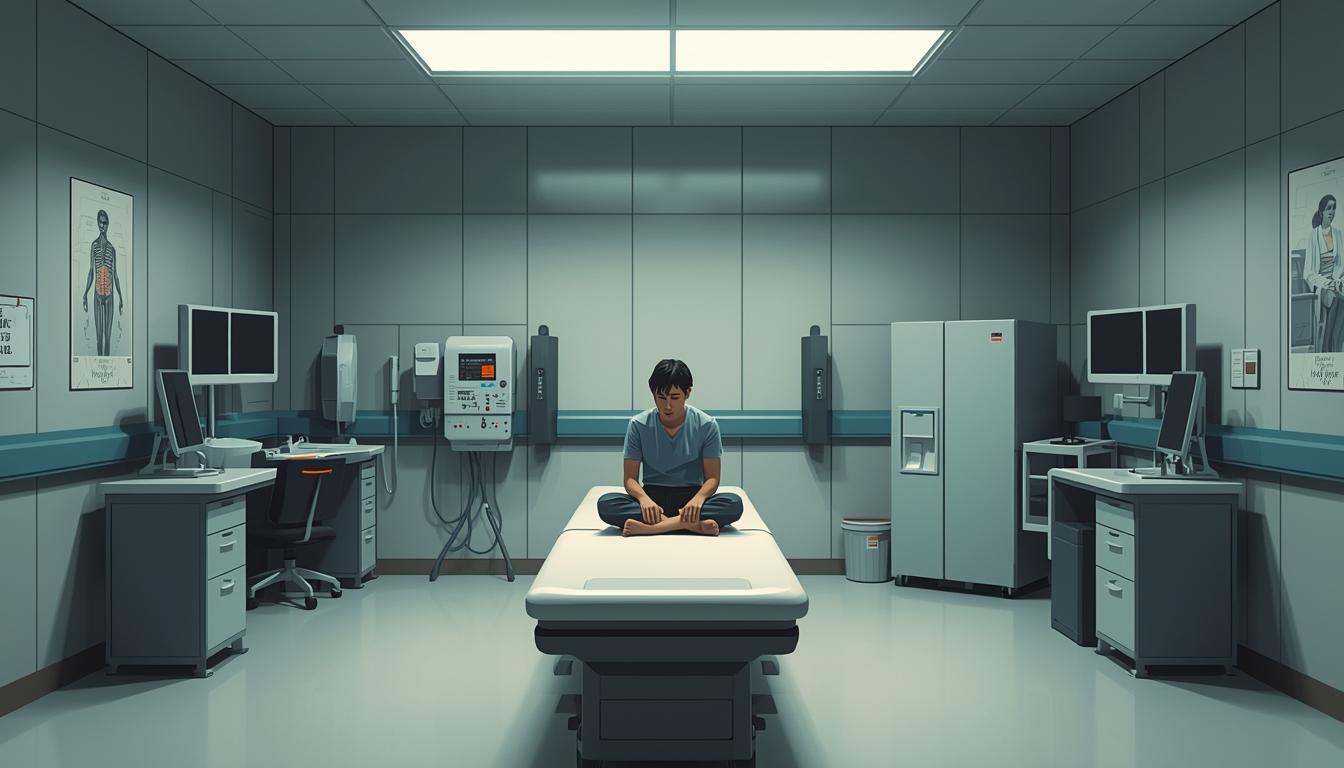
Introduction: When a Condition Doesn’t Belong Anywhere
Chronic pain affects millions of people worldwide, yet it remains one of the most poorly integrated phenomena in modern healthcare. It is frequently investigated, referred, treated, and documented — but rarely understood in a coherent way.
Rather than being fully ignored, chronic pain has become something else: a misfit. It exists within the system, but does not align with how the system is structured to see, measure, and act.
This is not a mystery of medicine. It is a problem of design.
A System Built Around Clear Pathology
Modern healthcare developed around conditions that:
- Have identifiable tissue damage
- Follow predictable timelines
- Respond to targeted interventions
This model works exceptionally well for acute injury, infection, and structural disease.
Chronic pain often does not follow this logic. It may persist without clear pathology, fluctuate unpredictably, and involve multiple interacting systems. When the organizing framework of healthcare is built around lesion → diagnosis → treatment, anything that breaks that chain becomes difficult to place.
Pain Without a Single Owner
Healthcare is divided by specialties, each responsible for a defined domain. Chronic pain routinely crosses:
- Musculoskeletal
- Neurological
- Psychological
- Social
- Environmental
No single specialty fully owns the condition. As a result:
- Responsibility fragments
- Explanations vary
- Care becomes episodic
Chronic pain moves between silos, never fully belonging to any of them.
Diagnostic Tools Favor What Can Be Seen
Imaging, laboratory tests, and clinical examinations are designed to detect structural abnormalities. They are powerful tools — but limited by what they are built to reveal.
Chronic pain frequently produces:
- Normal or inconclusive test results
- Findings that do not correlate with experience
- Ambiguous or conflicting signals
Within a system that privileges objective findings, pain that cannot be clearly visualized becomes harder to legitimize.
Time-Based Systems Clash with Long-Term Experience
Healthcare workflows are optimized for short encounters and rapid decisions. Chronic pain unfolds over months or years, shaped by history, context, and adaptation.
This creates a mismatch:
- The system operates in snapshots
- Chronic pain exists as a continuum
What cannot be fully captured in brief encounters risks being oversimplified or deferred.
Measurement Bias Shapes Perception
Healthcare systems rely on metrics to allocate resources and evaluate success. Acute pain can be:
- Measured
- Resolved
- Closed
Chronic pain resists closure. Outcomes such as function, tolerance, and quality of life evolve slowly and unevenly.
When success is defined by resolution, conditions defined by persistence become structurally disadvantaged.
Cultural Narratives Reinforce the Misfit
Historically, pain has been framed as a signal of injury or disease. Chronic pain challenges this narrative by persisting beyond healing.
When cultural and clinical expectations do not align with lived experience, misunderstanding fills the gap. This is not a failure of belief, but a failure of conceptual frameworks.
The Result: Chronic Pain as a System Anomaly
Over time, chronic pain has come to occupy an uncomfortable position:
- Too common to ignore
- Too complex to standardize
- Too persistent to resolve
It is managed, referred, and documented — yet remains poorly integrated into system logic.
The issue is not that chronic pain is rare or unclear. It is that the system was not designed with it in mind.
HealthX360 Perspective
HealthX360 explores why certain health experiences fall through structural gaps. Chronic pain is not a clinical anomaly; it is a systems anomaly — revealing the limits of models built around acute pathology and short-term resolution.
Understanding this mismatch helps explain why chronic pain so often feels misunderstood, fragmented, or inadequately supported.
Conclusion: Misfit by Design, Not by Nature
Chronic pain did not become a misfit because it is illegitimate or unimportant. It became a misfit because healthcare systems evolved around different assumptions.
Until systems are designed to accommodate long-term, multifactorial experiences, chronic pain will continue to exist at the margins — present, acknowledged, but never fully at home.