
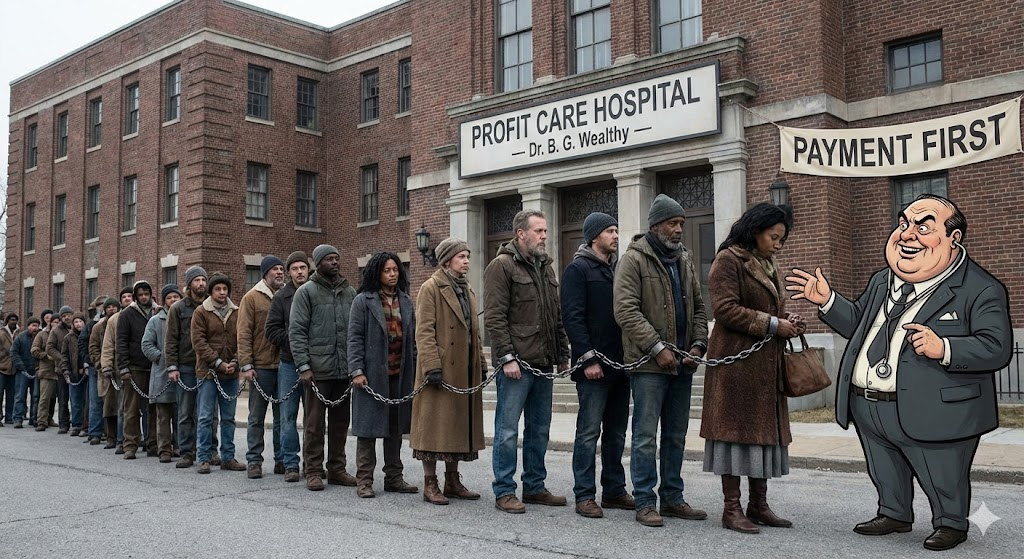
Chronic pain is not just a medical condition. It’s an economic ecosystem where every stage of suffering generates profit for someone else.
If you’ve spent years cycling through pain specialists, injections, imaging, medications, physical therapy, and surgical consultations without ever understanding why you’re in pain — you’re not experiencing medical failure. You’re experiencing the supply chain of pain working exactly as designed.
This supply chain doesn’t exist because doctors are cruel or pharmaceutical companies are evil. It exists because chronic pain, chronic illness, and complex functional syndromes have been structurally converted into renewable revenue streams. Every stage of the journey from initial symptom to lifelong management creates billing opportunities, and the system is optimized to keep you moving through that pipeline indefinitely.
Understanding this isn’t cynicism. It’s clarity. And clarity is essential if you’re going to make sense of why you’ve received endless interventions but almost no explanation, why treatments are abundant but understanding is scarce, and why the system seems far more interested in managing your pain than resolving it.
Let me walk you through how chronic pain becomes a business model — stage by stage, intervention by intervention — and why this structure is fundamentally incompatible with actually helping you heal.
Stage One: Entry Into the System — Creating the Patient
The supply chain begins with converting a person experiencing pain into a patient with a billable diagnosis. This seems neutral, even necessary. But how pain is framed at this initial stage determines everything that follows.
In acute pain — a broken bone, a torn ligament, a surgical recovery — the pathway is clear. There’s an injury, a treatment, and an expected resolution timeline. The medical model excels here. But chronic pain is different. It persists beyond tissue healing timelines. It spreads. It becomes centralized in the nervous system. It resists structural explanations.
Yet the medical system still tries to force chronic pain into an acute injury framework because that’s what generates billable interventions. A person walks in with back pain that’s been present for months or years. Instead of exploring nervous system sensitization, stress physiology, trauma history, or the contexts that might be perpetuating threat states in the body, the system immediately moves to imaging.
An MRI is ordered. This is the first billable event. The MRI almost always finds something — a bulging disc, mild degeneration, facet joint changes — because these findings are present in most adults over thirty, including those with no pain at all. But once identified, these structural “abnormalities” become the explanation. The pain now has a diagnosis. A billable code. An entry point into the supply chain.
Never mind that research shows poor correlation between imaging findings and pain severity. Never mind that similar structural findings exist in pain-free populations. Never mind that chronic pain is now understood to involve central sensitization, neuroplastic changes, and nervous system threat responses far more than tissue damage. The structural diagnosis is economically necessary because it justifies the next stage: intervention.
Stage Two: The Specialist Referral Cascade
Once a structural diagnosis exists, the patient enters the specialist referral cascade — a highly profitable stage where the person with pain is fragmented into billable body parts and cycled through multiple specialists, each viewing the problem through their narrow procedural lens.
The primary care physician refers to an orthopedist. The orthopedist might refer to a pain management specialist. Pain management might refer to a neurosurgeon for evaluation. Physical therapy gets ordered. Maybe a rheumatologist if autoimmune issues are suspected. Possibly a physiatrist. Each referral is a separate appointment, a separate copay, a separate billing event.
Here’s what rarely happens: these specialists don’t communicate with each other in any meaningful way. There’s no coordinated effort to understand the whole person, their nervous system state, their stress load, their trauma history, or the contexts perpetuating their pain. Each specialist sees their isolated domain, recommends their particular intervention, and sends the patient back into the system.
This fragmentation isn’t a bug. It’s a feature. Specialization creates more billable touchpoints. A unified, holistic approach where one provider spends significant time understanding the complex biopsychosocial roots of chronic pain would be far less profitable than cycling someone through five specialists who each order tests and recommend procedures.
The patient, meanwhile, becomes increasingly confused and demoralized. Five different explanations. Five different recommendations. No coherence. No one addressing the question that actually matters: why is my nervous system stuck in a pain state, and what can I do about it?
Stage Three: Procedural Interventions — The Core Revenue Engine
This is where the supply chain reaches maximum profitability. Procedures. Injections. Nerve blocks. Ablations. Surgeries. Every procedural intervention generates significant revenue for providers, facilities, device manufacturers, and pharmaceutical companies.
Epidural steroid injections for back pain. Facet joint injections. Trigger point injections. Radiofrequency ablation. Spinal cord stimulators. Knee arthroscopies for degenerative changes. Shoulder surgeries for impingement. The list is extensive, and the profit margins are substantial.
Here’s what the research often shows: many of these procedures provide temporary relief at best, and some provide no benefit beyond placebo. Yet they remain standard practice because they’re highly reimbursable. A pain management physician can perform multiple injections per day, generating far more revenue than spending that time educating patients about nervous system regulation, stress reduction, or trauma-informed movement practices.
Surgeries are even more lucrative. A spinal fusion for chronic back pain can cost tens of thousands of dollars. The evidence for benefit in non-specific chronic back pain is weak, and many patients end up worse off — sometimes requiring additional surgeries to address complications. But each surgery is a major billing event. The hospital profits. The surgeon profits. The device manufacturer profits. The anesthesiologist profits.
The patient? They’ve now been through a major medical intervention, face a lengthy recovery, and often still have pain because the root cause — nervous system sensitization, unresolved stress physiology, trauma-related threat states — was never addressed.
But from the supply chain’s perspective, this isn’t failure. The patient is still in the system. Still seeking solutions. Still generating revenue.
Stage Four: Pharmaceutical Management — The Subscription Model
If procedures don’t resolve the pain (and they often don’t), the next stage is pharmaceutical management. This is where chronic pain becomes a subscription-based revenue model — patients taking medications daily, monthly, indefinitely.
The opioid epidemic revealed the most destructive version of this model. Pharmaceutical companies aggressively marketed opioids for chronic pain, downplaying addiction risks and promoting the idea that pain should be treated as the “fifth vital sign” requiring pharmaceutical intervention. Doctors prescribed them liberally. Patients became dependent. Overdose deaths skyrocketed.
Even after the scale of the crisis became undeniable, the underlying model persists. Opioids have been partially replaced by other medications: gabapentinoids for neuropathic pain, muscle relaxants, anti-inflammatories, antidepressants prescribed off-label for pain, anti-anxiety medications for associated distress. The specific drugs change. The logic remains: chronic pain requires chronic pharmaceutical intervention.
Each prescription is a recurring revenue event. Unlike a surgery that happens once, medications generate monthly refills. Patients stay on them for years or decades. Dose escalations create additional appointments and billing. Side effects require additional medications to manage. The complexity compounds, but so does the revenue.
What’s missing in this model is any serious exploration of why someone’s pain persists, what’s happening in their nervous system, how stress and trauma might be perpetuating central sensitization, or what non-pharmaceutical approaches might address root mechanisms. Those questions don’t generate prescription revenue.
Pharmaceutical companies invest billions in developing new pain medications and marketing existing ones. They invest almost nothing in educating the public or providers about nervous system regulation, trauma physiology, or the biopsychosocial complexity of chronic pain. Why would they? That knowledge reduces pharmaceutical dependence.
Stage Five: Chronic Management — The Perpetual Pipeline
If you’ve reached this stage, you’ve become a chronic pain patient in the system’s taxonomy. You’re no longer expected to get better. The goal shifts from resolution to management. And management is where the supply chain achieves maximum sustainability.
Chronic management means regular appointments, ongoing prescriptions, periodic imaging to “monitor” degenerative changes, repeated injections when the last ones wear off, physical therapy maintenance sessions, pain psychology referrals (often cognitive-behavioral approaches focused on “coping” rather than addressing root causes), and the occasional surgical revision or new procedure when something else goes wrong.
This creates a steady, predictable revenue stream. You’re in the system indefinitely. Every month brings billable encounters. The pain clinic becomes a regular destination. The pharmacy knows your name. The specialists have you on annual follow-up schedules.
From a business perspective, this is ideal. Recurring revenue. Predictable utilization. A stable patient base. Healthcare institutions can forecast income based on their chronic pain population. Pharmaceutical companies can project prescription volumes. Device manufacturers can anticipate demand for implants and stimulators.
From your perspective, this is existential despair. You’ve been through everything the system offers, and you’re still in pain. You’re told to “manage expectations,” that chronic pain is something you’ll “have to live with,” that you should focus on “functioning despite the pain.” The implicit message is that the problem is now yours to bear. The system has done what it can (i.e., exhausted its procedural and pharmaceutical options), and your continued suffering is simply unfortunate.
What’s never acknowledged is that the system wasn’t designed to address what you actually needed from the beginning: understanding the neurobiological, psychological, and contextual roots of your pain and addressing them through nervous system regulation, trauma work, stress reduction, movement restoration, and meaning-making.
The Missing Stage: Root Cause Resolution
There’s a stage that doesn’t exist in the supply chain: resolving chronic pain by addressing why it’s happening.
This would require time-intensive exploration of nervous system states, stress physiology, adverse childhood experiences, current life stressors, movement patterns, sleep quality, relational context, and the meanings someone has constructed around their pain and their body. It would require education about central sensitization, neuroplasticity, and how the brain and nervous system create and perpetuate pain even in the absence of ongoing tissue damage.
It would require approaches like somatic therapy, trauma-informed movement practices, nervous system regulation techniques, pain neuroscience education, addressing sleep and metabolic health, and potentially spiritual or existential meaning-work for people whose pain has become entangled with identity, purpose, and worldview.
None of this is highly billable. None of it is procedural. None of it fits the fifteen-minute appointment model. None of it involves devices, pharmaceuticals, or surgical theaters. It requires relationship, depth, and time.
So it exists mostly at the margins of the healthcare system — in the practices of a few trauma-informed therapists, pain neuroscience educators, somatic practitioners, and integrative clinicians who’ve stepped outside the standard supply chain. These providers often don’t take insurance because insurance doesn’t reimburse this kind of work adequately. The people who can access them are those with resources to pay out of pocket.
Everyone else remains in the supply chain, moving from procedure to prescription to procedure again, generating profit at every stage but rarely finding resolution.
The Autoimmune and Functional Syndrome Pipeline
While I’ve focused on chronic pain, the same supply chain logic applies to autoimmune diseases, fibromyalgia, chronic fatigue syndrome, irritable bowel syndrome, interstitial cystitis, POTS, and the vast landscape of complex chronic conditions that dominate modern healthcare utilization.
These conditions are chronic. They’re complex. They involve immune dysregulation, nervous system dysfunction, metabolic disturbances, and often significant stress and trauma histories. They don’t resolve with a single procedure or medication. They require lifelong management.
Which makes them economically perfect.
A person with rheumatoid arthritis enters a pharmaceutical pipeline that often includes expensive biologic medications costing thousands per month, regular rheumatology appointments, periodic imaging, and eventually joint replacement surgeries. The supply chain can extract value from this patient for decades.
A person with fibromyalgia cycles through neurologists, rheumatologists, pain specialists, and psychiatrists. They’re prescribed gabapentinoids, antidepressants, muscle relaxants, and sleep medications. They undergo physical therapy, trigger point injections, and maybe off-label treatments. They’re told there’s no cure, only management. The appointments never end.
Someone with chronic fatigue syndrome or long COVID faces a similar trajectory — specialists who don’t understand the condition, experimental treatments, symptom management, and the implicit message that they’ll have to live with this indefinitely.
What’s rarely explored in any depth is the role of chronic stress, trauma, nervous system dysregulation, mitochondrial dysfunction, environmental toxins, gut dysbiosis, or the complex interplay of factors that create these conditions. Those explorations don’t fit the procedural model. They don’t generate the same revenue density.
So patients remain in management pipelines, consuming healthcare resources indefinitely, while the root mechanisms perpetuating their illness go unaddressed.
Why “Cures” Are Bad for Business
Here’s the uncomfortable truth: from a business perspective, curing chronic illness is a terrible idea. A cured patient stops generating revenue. They leave the supply chain. They no longer need appointments, prescriptions, procedures, or monitoring.
Acute medicine has natural endpoints. You treat an infection, it resolves, the patient leaves. You set a broken bone, it heals, the patient leaves. This is economically fine because there’s always a new supply of acute patients.
But chronic disease is different. The same patients can generate revenue for years or decades. Curing them would require the healthcare industry to constantly find new patients to replace the cured ones, and many chronic conditions are driven by systemic factors (stress, environmental toxins, lifestyle, social determinants) that aren’t being addressed at scale. The supply would eventually diminish.
Management, on the other hand, is sustainable. Patients stay in the system. Revenue is predictable and recurring. Growth comes from expanding the patient base (by lowering diagnostic thresholds and medicalizing more conditions) rather than from cure and turnover.
This doesn’t mean individual clinicians want patients to remain sick. Most genuinely want to help. But they’re operating within economic and institutional structures that make management far more viable than resolution. The incentives, the reimbursement models, the time constraints, and the procedural focus all align to keep patients in the supply chain rather than help them exit it.
What This Means for You
If you’re stuck in the chronic pain supply chain or living with a complex chronic illness that the system hasn’t helped you understand or resolve, recognizing these structural realities is clarifying.
You haven’t failed. The interventions you’ve tried weren’t necessarily wrong. The specialists you’ve seen weren’t necessarily incompetent. But the system they’re operating within is optimized for management, not resolution. For profit, not understanding. For procedural throughput, not depth.
Your pain or illness has become a renewable resource for a healthcare economy that depends on chronic disease prevalence. Every stage of your journey through the system generated revenue for someone. And the system is designed to keep you moving through that pipeline indefinitely because your exit — your healing — represents lost revenue.
This doesn’t mean there’s no help available. It means that genuine help often exists outside the profitable supply chain. It exists in frameworks that prioritize understanding over intervention, in practitioners who work at the margins of standard care, in education you seek independently, and in the work you do to understand your own nervous system, trauma history, and the contexts perpetuating your suffering.
The supply chain won’t save you because you being in pain is what sustains it.
Conclusion: Economic Structures Shape Medical Reality
Chronic pain and chronic illness aren’t just medical phenomena. They’re economic ecosystems. The supply chain of pain is real, it’s profitable, and it’s structurally designed to perpetuate itself.
Every stage — from initial diagnosis through specialist referrals, procedural interventions, pharmaceutical management, and chronic maintenance — generates revenue. The system is optimized to keep patients moving through this pipeline, not to help them exit it.
This isn’t conspiracy. It’s how markets work when profit incentives are misaligned with patient outcomes. When chronic disease becomes more valuable than health, institutions will optimize for disease management.
HealthX360 exists because understanding chronic pain and complex illness requires stepping outside the supply chain’s logic. It requires frameworks that acknowledge nervous system complexity, trauma physiology, stress, context, and the non-procedural, non-pharmaceutical mechanisms of healing.
Before you can heal, you have to understand what you’re actually dealing with. And what you’re dealing with isn’t just a medical condition. It’s a business model that profits from your suffering lasting as long as possible.