
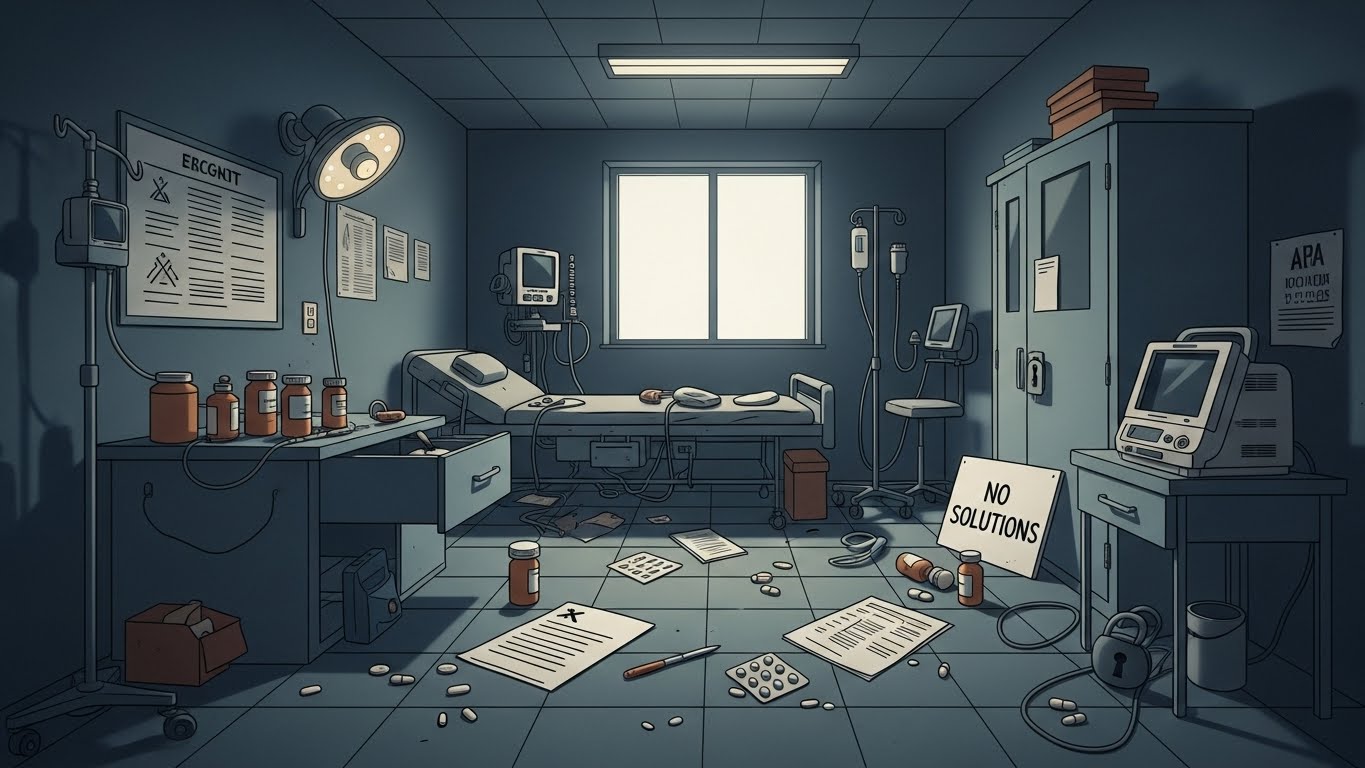
Chronic pain is one of the most prevalent and disabling health problems worldwide. Yet millions of people living with persistent pain feel misunderstood, dismissed, or inadequately supported by the healthcare system. This is not because clinicians do not care. It is because modern healthcare was never structurally designed to deal with chronic pain.
This article explains why chronic pain patients struggle within conventional medical systems, how this mismatch developed, and why education—not more treatments—is often the missing piece.
Acute Care Origins: A System Built for Short-Term Problems
Modern healthcare evolved primarily to address acute, life-threatening conditions:
- Infections
- Trauma
- Surgical emergencies
- Clearly identifiable disease processes
These problems share key characteristics:
- A clear cause
- Objective diagnostic markers
- A predictable timeline
- A defined endpoint (recovery or stabilization)
Chronic pain fits none of these criteria.
Pain that persists for months or years often continues without visible tissue damage, clear biomarkers, or linear progression. The biomedical model—brilliant for acute illness—struggles when symptoms persist beyond healing.
The Biomedical Model and Its Limits
Healthcare education and practice are still largely based on a reductionist biomedical framework:
- Identify pathology
- Localize damage
- Fix the structure
When imaging, blood tests, or scans fail to reveal a cause, the system reaches its limits. For chronic pain patients, this often leads to:
- Repeated investigations
- Conflicting diagnoses
- Over-reliance on medications
- Implicit or explicit dismissal (“nothing is wrong”)
The problem is not patient complexity. It is a model mismatch.
Chronic Pain Is Not Just a Symptom
Modern research shows that chronic pain is not merely prolonged acute pain. It involves:
- Changes in the nervous system
- Altered pain processing in the brain
- Interactions between biology, psychology, and environment
- Learning, memory, threat perception, and context
In other words, chronic pain is a condition in itself, not a simple signal of tissue damage.
Yet most healthcare systems still treat pain as a secondary symptom rather than a primary condition requiring its own framework.
Time Pressure and Fragmented Care
Chronic pain requires:
- Time
- Listening
- Education
- Long-term follow-up
- Multidimensional understanding
Modern healthcare is optimized for:
- Short consultations
- High patient volume
- Single-discipline silos
- Protocol-driven decisions
This structural reality leaves little room for exploring:
- Pain beliefs
- Fear and avoidance patterns
- Lifestyle and social context
- Past experiences and meaning-making
As a result, patients are often passed between specialists without integration or coherence.
Why Patients Feel Invalidated
Many chronic pain patients report feeling:
- Not believed
- Labeled as difficult
- Told the pain is “in their head”
- Responsible for fixing a problem they do not understand
This is not a communication failure alone. It reflects a deeper issue: the system lacks a shared language to explain persistent pain in a meaningful, non-reductive way.
Without explanation, reassurance becomes dismissal.
The Education Gap
One of the most overlooked failures in chronic pain care is lack of accessible, accurate education.
Patients are rarely taught:
- How pain works
- Why pain can persist without damage
- How stress, context, and learning influence symptoms
- What is within their control and what is not
This vacuum is often filled by:
- Pseudoscience
- Oversimplified narratives
- Fear-based messaging
- Unrealistic promises of quick fixes
Education does not replace care—but without education, care remains incomplete.
Why This Is Not About Blaming Healthcare
Clinicians operate within the systems they are trained and paid to work in. Many are aware of these limitations and deeply frustrated by them.
The issue is structural, not individual:
- Training models
- Reimbursement systems
- Cultural expectations
- Outdated definitions of pain
Chronic pain exposes the cracks in a system built for a different era of medicine.
Moving Forward: A Different Way of Understanding Pain
Addressing chronic pain effectively requires:
- Multidimensional frameworks
- Clear, non-alarmist explanations
- Respect for patient experience
- Separation of education from treatment decisions
- Recognition that pain is both biological and contextual
This is where independent, research-based educational platforms play a critical role—bridging the gap between complex science and lived experience without offering medical advice or false certainty.
Final Thought
Modern healthcare did not fail chronic pain patients out of neglect. It failed by design—because it was never built for conditions that blur the boundaries between body, brain, environment, and meaning.
Understanding this is not the end of the conversation. It is the beginning of a more honest, humane, and informed approach to pain.
HealthX360 is an educational platform dedicated to explaining complex health conditions like chronic pain through evidence-based, multidimensional frameworks—without diagnoses, treatments, or medical claims.